Entretien
How to choose the right vegan culinary school
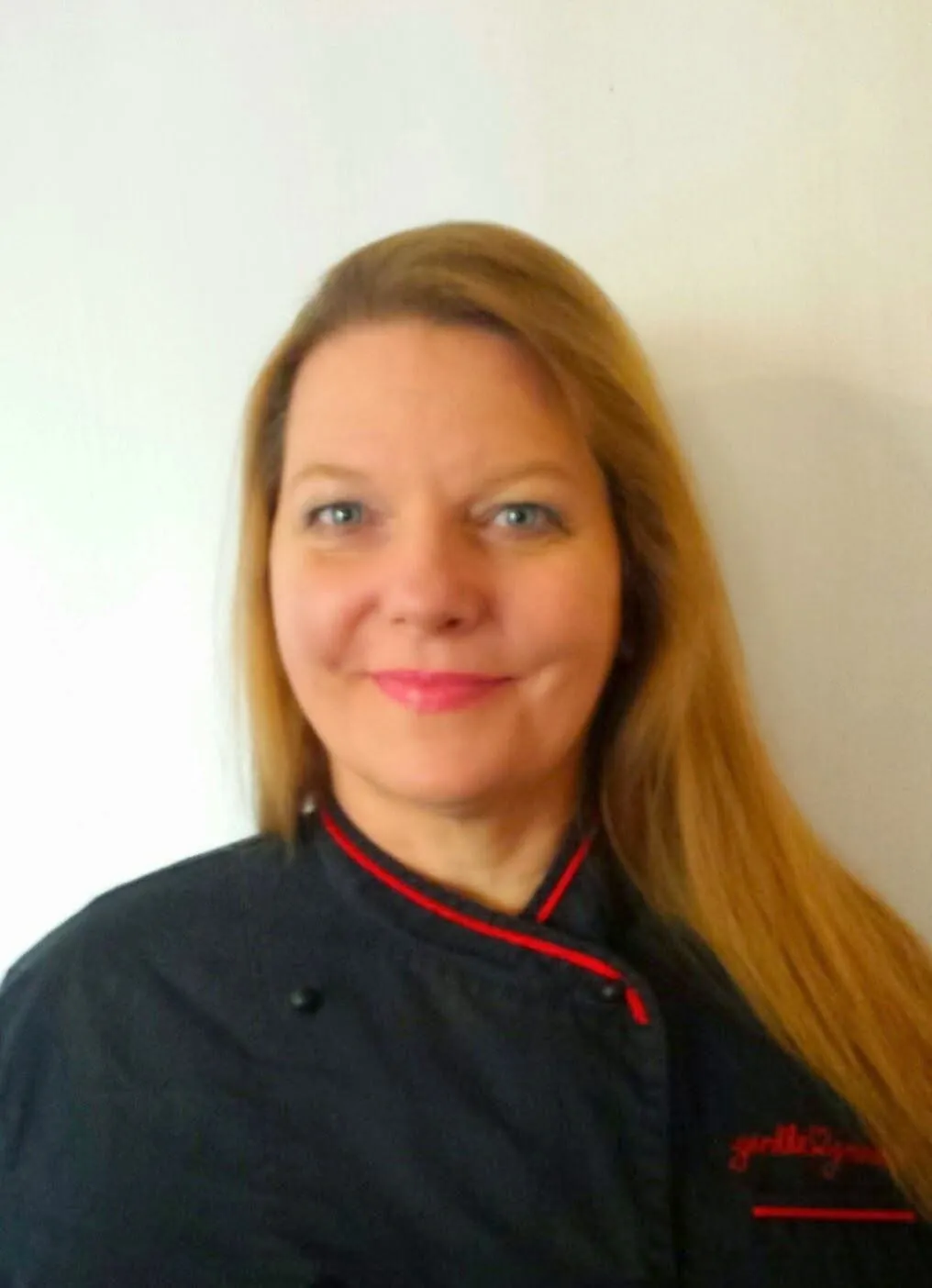
Entretien avec Deborah Brown Pivain, fondatrice de Gentle Gourmet.
Texte en anglais, langue des cours ; traduction française à venir.
Entretien
Entretien avec Deborah Brown Pivain, fondatrice de Gentle Gourmet.
Texte en anglais, langue des cours ; traduction française à venir.
Understanding your ambitions, your learning style, and the culinary education that best suits you.
For more than three decades, Deborah Brown Pivain has combined a passion for gastronomy with a profound respect for life and the natural world.
A pioneer of vegan gastronomy in France and Europe, she founded Gentle Gourmet in Paris in 2009, at a time when vegan cuisine was barely understood, let alone recognized as a serious gastronomic discipline.
Her culinary journey, however, began much earlier at Domaine de Brocfontaine, her Normandy property, where she developed an approach to cooking rooted in the seasons, the gardens, hospitality, and the pleasure of sharing beautiful meals.
Through restaurants, catering, culinary education, hospitality, and the organization of vegan festivals, she has helped introduce plant-based gastronomy to a wider audience and demonstrate that compassion and culinary excellence can go hand in hand.
Today, she has come full circle, returning to Domaine de Brocfontaine, where she and her daughter welcome aspiring professionals for intensive culinary and pastry programs combining technical excellence with exceptionally personalized instruction.
We spoke with her about choosing the right vegan culinary school, the importance of professional experience, and the difference between following a culinary trend and dedicating a lifetime to a conviction.
I believe the first step is to ask yourself a very simple question: What am I really looking for?
Some people want to join a large kitchen brigade, work in prestigious establishments, and learn how to handle the pressure of a professional kitchen with a large staff, a fast-paced environment, and considerable competition.
For these individuals, a large culinary school, with many students, highly structured examinations, and an atmosphere similar to that of a traditional professional kitchen, can be an excellent choice.
Others have very different ambitions. They may want to open a café, establish a catering business, launch a vegan pastry company, offer culinary workshops, develop a plant-based bed-and-breakfast, or simply acquire an in-depth culinary education in a more personalized environment.
For these individuals, a more intensive, focused training program with very few students may be far more appropriate.
*The question should not simply be, "Which school is the best?" but rather, "Which school is best suited to my ambitions? »*
No, and I think it's important to be honest about that. Our school is ideally suited to certain individuals, but it won't necessarily be the right choice for everyone.
We are not a large institution with numerous students, a competitive atmosphere, or an impersonal organizational structure.
We generally welcome one to two students at a time, sometimes three when their professional goals are similar. We deliberately keep enrollment extremely limited because we believe that intensive instruction requires close attention to each individual's progress.
A student is never just another name on an enrollment list. We work with each person's existing knowledge, objectives, pace of learning, strengths, and areas requiring improvement.
And because we work with so few students, we can adapt certain aspects of the instruction without compromising the structure or technical content of the curriculum.
The training is demanding, but it takes place in a calm, focused, and deeply personal environment.
Above all, individuals who are looking for serious professional instruction combined with personalized guidance.
For example, someone who wants to open a small plant-based restaurant, a vegan pastry shop, a catering business, a guesthouse offering gourmet meals, a vacation property with culinary workshops, or another professional venture centered around plant-based cuisine can benefit enormously from this format.
We can explore culinary and pastry techniques in considerable depth, but always in relation to the student's actual project.
The objective is not simply to learn recipes. It is to understand the fundamentals, master techniques, recognize and correct mistakes, develop organizational skills, create a coherent culinary offering, and learn how to transform technical expertise into a viable professional project.
Some of our students already have professional culinary experience and wish to specialize in plant-based cuisine or pastry. Others are making a career change and need to build their technical foundations.
Their backgrounds may be different, but they share something important: a desire to acquire genuine competence rather than simply accumulate recipes.
The setting makes a tremendous difference.
We are located on a beautiful countryside property in Normandy, surrounded by extensive gardens, a vegetable garden, an orchard, and a peaceful rural atmosphere. Our teaching kitchens are professionally equipped, but the environment is quite different from that of an urban culinary school.
And this is not an artificially created setting. It is a living, working property.
Here, we can explore seasonality, ingredients, harvesting, food preparation, preservation, and the creation of menus that reflect a particular environment and culinary identity.
The gardens and orchard are not simply pleasant surroundings. They are part of our culinary philosophy.
There is something profoundly instructive about seeing where ingredients come from, understanding their seasonal variations, and learning how their flavors, textures, and culinary possibilities evolve.
Students stay on the property throughout their training. This residential format allows them to concentrate on their studies without the daily distractions of commuting, shopping, preparing meals, or managing accommodations elsewhere.
Their meals, lodging, and instruction are integrated into one complete learning experience.
For some students, this peaceful atmosphere is essential. They learn best when they can concentrate, ask questions freely, repeat techniques, and develop a thorough understanding of what they are doing.
They are not necessarily looking for the constant activity of a large city or the pressure of a large group.
They are looking for complete immersion.
Yes, absolutely.
High standards are not determined by the number of students in a classroom. They are determined by the quality of instruction, the rigor of the methods taught, the precision of the techniques, and the level of competence expected from each student.
In a small training program, expectations can actually be more demanding because everything is observed.
You immediately notice when a texture is incorrect, when someone's organization lacks logic, when a recipe has not been fully understood, or when a particular technique needs additional practice.
There is very little room for a student to remain passive or to hide behind the work of others.
In our school, students are continuously involved in the preparation, execution, evaluation, and correction of their work.
But this level of attention should never come at the expense of the student's confidence or enthusiasm.
The purpose is not to create unnecessary stress.
The purpose is to develop genuine professional competence.
I would say that you need to be very honest with yourself.
If your ambition is to work in a large kitchen brigade, with a well-established hierarchy, high-pressure service, considerable speed, and a competitive environment, then it makes sense to seek training that exposes you to those professional realities.
On the other hand, if your ambitions are more personal, entrepreneurial, artisanal, or independent, it may be far more beneficial to choose a school that takes the time to understand your vision and adapt its teaching to your objectives.
That does not mean that small schools cannot prepare students for demanding professional environments or that large institutions cannot provide personalized instruction.
It simply means that different educational environments develop different strengths.
There isn't one right answer for everyone.
There is the right school for the right project.
Several things deserve careful consideration.
First, the professional experience of the instructors.
There is an enormous difference between knowing how to prepare a recipe and understanding everything involved in producing it consistently in a professional environment.
Second, examine the curriculum.
In vegan cuisine and pastry, understanding the functions of ingredients is absolutely essential: fats, plant proteins, fibers, sugars, gelling agents, emulsions, and the mechanisms responsible for creating different textures.
Students should learn not only how something works, but why it works.
They should also learn how to adapt when ingredients change, when a preparation behaves unexpectedly, or when a recipe needs to be adjusted.
Third, consider the teaching format.
Some people thrive in large groups. Others learn much more effectively through individualized instruction.
Much depends on the student's personality and preferred learning style.
Finally, make sure that the training program is genuinely consistent with your professional ambitions.
A diploma is important, but the knowledge, judgment, and technical independence you acquire are what will ultimately determine your professional abilities.
I welcome it wholeheartedly. The fact that major culinary institutions now recognize plant-based cuisine is a sign of how far we have come.
But Gentle Gourmet has a rather different history.
When I founded Gentle Gourmet in Paris in 2009, vegan gastronomy was hardly recognized in France. Very few people even understood what the word "vegan" meant, and there was certainly no established market for fine vegan dining comparable to what exists today.
We did not begin because there was a growing demand for vegan cuisine.
We began because of a deeply held conviction: that life has value, and that it is possible to enjoy beautiful, generous, refined gastronomy without causing unnecessary harm to other living beings.
We wanted to demonstrate that compassion and gastronomic excellence were not contradictory. Quite the opposite.
Through our festivals, restaurant, catering activities, cooking school, and hospitality, we worked to introduce people to a cuisine they often knew very little about.
In a sense, rather than responding to an existing demand, we helped create one.
I am delighted that other institutions have since embraced plant-based cuisine. The more seriously it is taught, the better.
But I do think there is something meaningful about the distinction between adding a plant-based program to an existing institution and creating an entire culinary enterprise around that philosophy before there was an established market for it.
Gentle Gourmet was born from conviction, not opportunity.
Not at all. The world around us has changed considerably, but the reason we began has remained the same.
Of course, our activities have evolved. We have gone from operating in Paris, with all the excitement and demands of a busy restaurant and catering business, to welcoming students in the quieter surroundings of our property in Normandy.
But our fundamental philosophy has never changed.
For me, vegan cuisine is not simply a specialty or a commercially attractive category. It is an expression of values that have guided much of my life.
That doesn't mean compromising on culinary standards. On the contrary, I have always believed that if we wanted people to embrace plant-based cuisine, we had to show them just how extraordinary it could be.
Flavor, texture, aroma, presentation, technical precision, and the pleasure of sharing a beautiful meal have always been essential to our approach.
Good vegan cuisine should not ask people to settle for less.
It should demonstrate how much is possible.
And that is precisely what I want to pass on to my students.
I want them to leave not only with professional skills, but also with the confidence to demonstrate that plant-based gastronomy can stand proudly alongside the finest culinary traditions.
Yes, very much so.
Vegan cuisine is not simply a cuisine defined by what is missing.
It is not just a question of removing eggs, butter, cream, or meat from traditional recipes.
It requires a different way of thinking about how a dish or pastry is constructed.
In pastry, for example, you must understand the functions performed by an egg in a particular preparation.
Once you understand these functions, you can determine which ingredients and techniques will reproduce the desired results.
And the solution will not necessarily be the same for every recipe.
The same principle applies to savory cuisine. A chef must understand how ingredients contribute flavor, aroma, texture, mouthfeel, and visual appeal, and how even something as simple as the size and shape of a vegetable cut can influence the finished dish.
This is why serious vegan culinary and pastry education must be highly technical.
It cannot be limited to simple ingredient substitutions.
I have always felt that one of the greatest mistakes in culinary education is teaching students to reproduce perfectly calibrated recipes without giving them the tools to understand and adapt those recipes.
If the student has learned only the recipe, the result may be disappointing.
If the student has learned the underlying principles, adjustments become possible.
That understanding is what allows a chef to become truly independent and creative.
Our school is built around three fundamental principles: professional experience, technical precision, and personalized instruction.
Our culinary journey actually began at Domaine de Brocfontaine long before Gentle Gourmet opened in Paris.
When we later established Gentle Gourmet in 2009, we brought with us years of experience in hospitality, gardening, and creating meals that celebrated the ingredients and seasons.
In Paris, we operated a b&b, a restaurant, a catering business, a culinary school, and a pastry laboratory.
That experience taught us not only how to create food, but how to manage the numerous practical challenges involved in a professional culinary business.
Today, at Domaine de Brocfontaine, we have brought these different aspects of our experience together.
We have chosen a more intimate and focused approach to culinary education, with an emphasis on intensive professional training.
We train very few students at a time, but we train them thoroughly.
Our students do not simply observe demonstrations. They actively work through the techniques, evaluate their results, identify problems, and learn how to correct them.
We also believe that the experience surrounding the training matters. The beautiful countryside, the gardens, the meals, and the opportunity to concentrate entirely on one's education all contribute to the learning process.
We do not aspire to be the largest culinary school.
We aspire to provide the right environment for individuals seeking rigorous, personalized, and meaningful professional training, directly connected to their ambitions.
I think it comes back to why I began in the first place.
Gentle Gourmet was never simply a business venture for me. It was a way of putting a deeply held conviction into practice, and demonstrating through gastronomy that another approach to food was possible.
Teaching allows me to pass on everything we have learned, not only through success, but also through the countless practical challenges that come with creating and running culinary businesses.
When someone arrives here with a dream of opening a restaurant, establishing a pastry business, or developing a culinary project of their own, I know just how much they have ahead of them.
If I can help that person avoid certain mistakes, understand their craft more deeply, develop sound professional judgment, and gain confidence in their abilities, then I feel I am doing something worthwhile.
There is also tremendous satisfaction in seeing a student begin to understand something that previously seemed difficult or mysterious.
That moment when they no longer need to follow a recipe blindly, when they understand why a preparation works and can begin to make their own decisions, is particularly rewarding.
I have no ambition to turn Gentle Gourmet into a large institution. I want to continue teaching in a way that allows me to give each student my full attention.
And I intend to continue for as long as I am able.
For me, this school is more than a profession. It is a commitment to the veganism I intend to honor throughout my life.
Don't choose a school simply because it is famous, large, or located in an attractive city.
Choose a school because it corresponds to your professional aspirations, your way of learning, and the kind of working life you hope to build.
Someone who dreams of joining a large restaurant brigade does not have the same educational needs as someone who hopes to create a small, artisanal, plant-based business that reflects their personal values.
Ask questions. Learn about the instructors. Study the curriculum. Understand how much individual attention you will receive and what you will actually be capable of doing when the training ends.
And remember that the most suitable learning environment is not necessarily the one with the greatest number of students or the most impressive facilities.
What matters most is finding an environment where you can genuinely progress, ask questions, receive constructive criticism, benefit from experienced guidance, and leave with solid, practical skills.
After all, the real value of a culinary education is not simply the diploma you receive, but what you are truly capable of doing with the knowledge and skills you have acquired.
For us, plant-based cuisine is not a department. It is our foundation, our history, and our life's work.