Master Diploma · N° 2
Gluten-Free French Vegan Pastry
Le programme complet, semaine par semaine. 8 semaines, du 11 octobre au 3 décembre 2027.
Texte en anglais, langue des cours ; traduction française à venir.
Master Diploma · N° 2
Le programme complet, semaine par semaine. 8 semaines, du 11 octobre au 3 décembre 2027.
Texte en anglais, langue des cours ; traduction française à venir.
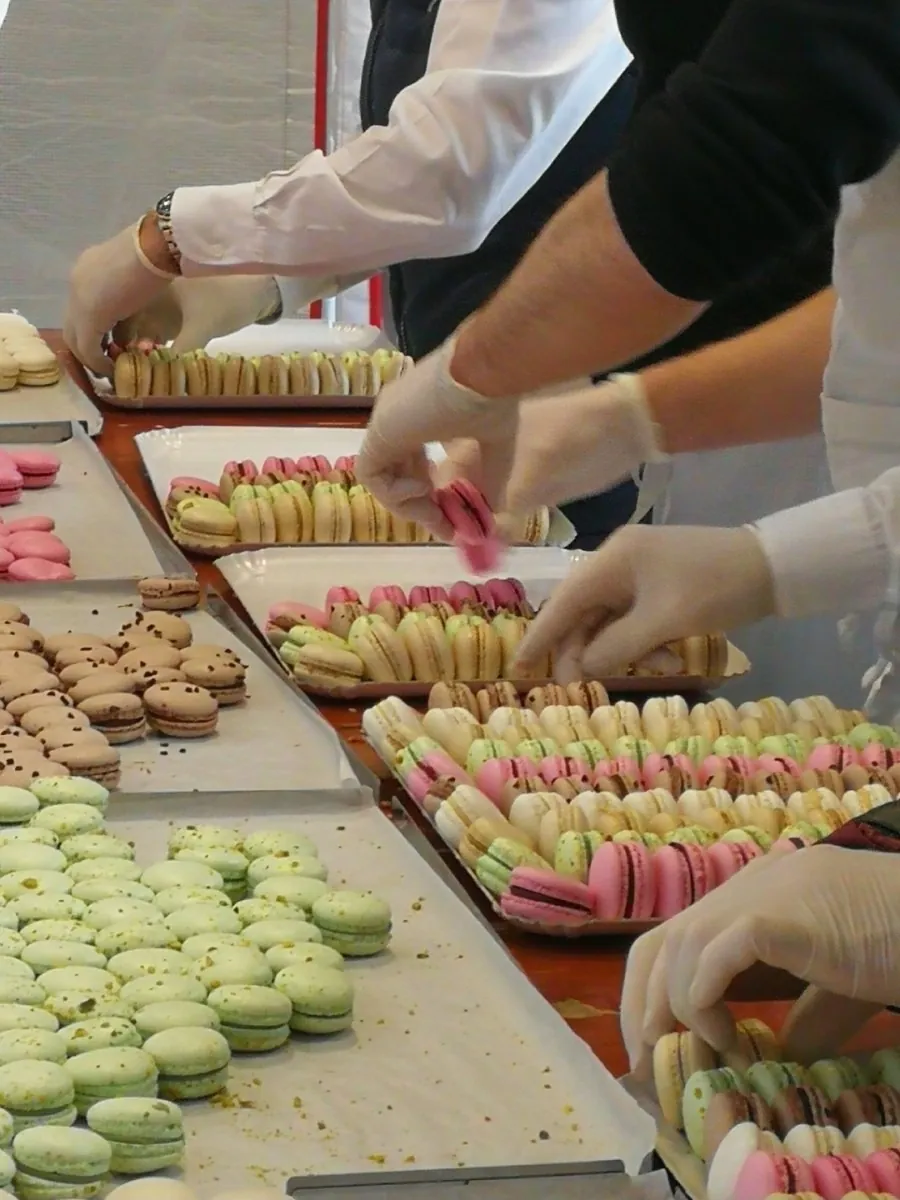
This eight-week professional intensive is ideal for:
The program is particularly suited to students who want to create pastries that are not simply “free from,” but genuinely excellent: elegant, structured, flavorful, beautiful and worthy of a professional pastry counter.
The program progresses from pastry formulation and core preparations to the most technical fields of French pâtisserie. Students complete the same classical and contemporary subjects as in the eight-week French Vegan Pastry diploma, using gluten-free formulations wherever flour or a flour-dependent dough is required.
Week 1 establishes the essential building blocks: creams, sauces, ganaches, caramel, gelées, glazes and an introduction to tart doughs, including gluten-free flour and starch combinations.
Week 2 applies those foundations to classical entremets and layered French desserts using gluten-free sponge and biscuit bases: Fraisier, Opéra, Black Forest, rolled cakes and fruit entremets.
Week 3 develops proficiency in travel cakes (madeleines, financiers, cannelés and pound cakes), fine cookies, regional baked desserts (flan, clafoutis, Far Breton and Tarte Normande), brioche and beignets—all adapted wherever flour is used.
Week 4 is dedicated to puff pastry (mille-feuilles and galettes des rois) and raised laminated pastry (croissants, two-color croissants, pains au chocolat, pains aux raisins, kouign-amann and contemporary variations), made with specialized gluten-free doughs.
Week 5 studies pastries and desserts traditionally based on egg whites, replaced here with aquafaba or potato protein: meringues, pavlovas, dacquoise, ladyfingers, charlottes and imaginative macarons.
Week 6 explores sophisticated entremets, petits fours and advanced tarts. With guidance, students recreate contemporary interpretations of classical pastries, applying gluten-free methods to any biscuit, cake, tart or other flour-based component.
Week 7 confronts one of the most technically difficult subjects in vegan pastry: choux pastry, now made without gluten as well as without eggs. Students prepare choux balls, profiteroles, éclairs, Paris-Brest, Saint-Honoré and a decorated choux tower.
Week 8 covers chocolate (selection, tempering, desserts, bonbons and decorations), nut pralines, fruit preparations such as apple tarte Tatin, and a full day devoted to ice creams. On the final morning, students visit a well-known nearby chocolate factory and museum.
By the end of eight weeks, students will have developed a broad, coherent understanding of gluten-free vegan French pastry, from everyday boutique pastries to elaborate professional desserts.
All meals are included.
Accommodation is included.
Classical and Contemporary Gluten-Free Vegan French Pastry.
This eight-week professional intensive is devoted to the art and science of French pastry in a fully plant-based and gluten-free format. It is designed for pastry chefs, vegan chefs, culinary professionals, entrepreneurs, teachers and ambitious home bakers who want to master the foundations of French pâtisserie.
French pastry is founded on precision, texture, structure and balance. Students learn to recreate its great classics without wheat flour, butter, milk, gelatin, cream or eggs, while preserving elegance, pleasure, technical discipline and professional presentation.
This is not a collection of simple substitutions. It is comprehensive technical training in vegan and gluten-free pastry: creams, sauces, tarts, entremets, laminated doughs, viennoiserie, petits fours, macarons and chocolate work.
Students learn not only what to make, but why each recipe works: intelligent egg replacement; stable creams and mousses; gluten-free flour and starch formulation; the use of binders where required; moisture management; rolling and laminating delicate doughs; clean slicing and professional finishes; and desserts that are beautiful, delicious and commercially viable.
Because flours, starches and manufactured plant-based ingredients differ from one country or supplier to another, students learn to assess their functional properties and adjust methods and proportions. A reliable recipe is a starting point—not a substitute for understanding the science behind it.
This program unites three specialized skills:
French pastry technique — the discipline, precision and elegance of classical pâtisserie.
Vegan pastry expertise — replacing dairy, eggs, gelatin and traditional fats with plant-based alternatives while maintaining flavor, texture and structure.
Together, these skills, combined with advanced gluten-free pastry formulation, constitute an unusually valuable professional expertise.
As more clients request plant-based and gluten-free desserts, professionals need training that goes beyond ingredient substitution. The program teaches students to think like pastry formulators, not merely recipe followers.
Professional gluten-free production — Production standard: Gluten-free flours, starches and other relevant ingredients are checked for gluten cross-contact; raw materials and workstations are stored and prepared separately from wheat-flour operations. Dedicated or demonstrably clean tools, safe equipment and disciplined handling are part of professional practice.
Week 1 is dedicated to core preparations used throughout French pastry. Students make stable, flavorful creams and fillings without eggs or dairy, and learn to produce gluten-free, egg-free and butter-free tart doughs that are crisp, tender and suitable for professional use.
Many pastry failures begin with weak foundations: heavy or overly starchy creams, fragile tart shells, unstable fillings, poor moisture control or insufficiently developed flavor. Students learn how to balance these elements from the beginning, with particular attention to the structure of gluten-free tart bases.
Students begin with the essential creams of French pastry in vegan form:
The focus is on texture, stability, mouthfeel and flavor. Students learn to replace eggs without excessive starchiness and to adjust each cream for tarts, entremets, choux fillings, layered desserts and plated components. Where a traditional cream uses wheat flour as a thickener, rice flour and/or cornstarch provide the alternative; the cooking method is adjusted to prevent a raw or pasty finish.
This day explores sugars and caramel; the sauces and accompaniments that bring freshness, contrast and elegance to pastry:
Students learn how to balance acidity, sweetness, thickness and shine. The day also introduces the role of sauces in professional presentation: not as afterthoughts, but as essential elements that complete a dessert.
Students learn how to create shine, clean slices, stable fillings and refined finishes. This day links the world of tarts to the world of entremets, preparing students for Week 2.
Technical focus — Flour-dependent note — Decorative tuiles require a recipe-specific blend of fine rice flour and cornstarch or potato starch. Because their low-gluten-free solids can spread differently and become very brittle, students evaluate batter viscosity, thickness, bake time and removal from the mold or tray.
Students study tart dough formulation specifically without wheat flour:
Practical work includes fruit tarts, pastry-cream tarts and citrus-curd tarts. Students compare shells made with different gluten-free flour blends and learn how to maintain crispness when fillings introduce moisture.
Technical focus — Technical practice — Compare a crisp, low-binder shell with a slightly more cohesive shell; examine hydration, resting, edge repair, resistance to cracking, and moisture barriers before filling.
This day builds on the previous work by exploring richer and more complex tart compositions:
Students combine crisp gluten-free tart shells, creamy fillings, fresh fruit, chocolate, nuts and decorative finishes. Special attention is given to transportability, clean slicing and a commercially attractive presentation.
Week 2 explores the great French entremets and layered desserts. Students combine gluten-free sponge cakes and biscuit layers with creams, mousses, fruit inserts, glazes, ganaches, syrups and refined finishes.
The goal is not simply to imitate classics, but to understand their architecture.
Génoise is a fine-grained sponge whose structure must withstand soaking, creams and mousses. Students prepare vanilla, chocolate and marbled or striped gluten-free versions, then use one to make a filled and glazed rolled cake. Fine rice flour with potato or cornstarch, potentially complemented by almond flour, replaces the wheat flour. The technical challenge is obtaining lightness, elasticity for rolling and resistance to crumbling without a gluten network; mixing, aeration, bake time and cooling are studied accordingly.
Technical focus — Rolled-cake technique — A thin, evenly baked gluten-free sponge must be rolled while sufficiently pliable; overbaking or delayed rolling can cause fracture.
Students prepare the components for a Fraisier: gluten-free sponge, strawberries, diplomat cream, diced strawberries in delicate syrup and strawberry gelée.
These components are assembled into a classic Fraisier. Students develop clean layers, stable cream, careful syrup absorption and elegant finishing, with particular attention to protecting the fragile gluten-free sponge from oversoaking.
Technical focus:
Black Forest cake combines chocolate sponge, cherries, cream, syrup and decoration. Students prepare a classical version and a contemporary interpretation. A light gluten-free rice-flour-and-starch blend replaces wheat flour in the chocolate sponge; aeration, moisture and layer stability are assessed so the finished cake remains light and balanced.
Technical focus:
Opéra depends on thin, precise layers and careful flavor balance. Students create traditional-style vegan Opéra with Joconde sponge, coffee, chocolate, cream and glaze. The usual wheat-flour fraction in the almond-based Joconde is replaced by fine rice flour and/or potato starch; very thin layers require special attention to flexibility and handling.
Technical focus — Joconde technique — Test sheet thickness, baking time and removal from baking paper before cutting the delicate biscuit into precision layers.
Technical focus:
Students create an elaborate fruit entremet with multiple components: gluten-free sponge or biscuit bases wherever required, mousses and creams, inserts, glazes, decoration and presentation. They practice achieving clean assembly and a balanced contrast of textures.
Technical focus:
Everyday French pâtisserie, presented through the precise techniques needed to make its familiar classics vegan and gluten-free.
Students study small French cakes and travel cakes, designed to be enjoyed without cutlery and therefore requiring excellent tenderness and mouthfeel. Fine rice flour, almond flour, sorghum flour and potato or cornstarch are combined differently for madeleines, financiers, cannelés and pound cakes rather than treated as a universal one-for-one substitute.
Preparations include:
Technical focus:
Technical focus — Flour-dependent techniques — Madeleines: preserve a fine, supple crumb; financiers: balance almond flour with light starch; cannelés: control crust formation and a custardy center; pound cakes: manage gas retention and sliceability without the elasticity of wheat flour.
This day explores creamy French regional desserts in vegan form, adapting the flour-based components while preserving each dessert’s traditional identity.
Preparations include:
Technical focus:
Technical focus — Flour-dependent techniques — Clafoutis and Far Breton use fine rice flour and starch instead of wheat flour, with mixing adjusted to limit sedimentation or grittiness. Flan pâtissier uses the gluten- free tart pastry learned in Week 1 when a shell is prepared.
Fine cookies are used both at tea time and as essential components of plated French desserts. Wheat-based formulas for tuiles, langues de chat, sablés and cigarettes are reworked with fine rice flour, almond flour and suitable starches, paying close attention to spread, fragility and crispness.
Preparations include:
Technical focus — Cookie techniques — Adapt flour-based tuile, langue-de-chat, sablé and cigarette recipes with selected gluten-free flour-and-starch blends. Compare spread, snap, rolling while hot, shortness and breakage. Coconut rochers are prepared as usual.
Enriched yeast doughs must develop softness, volume and enough structure for shaping and handling. Students formulate gluten-free versions with rice or sorghum flour, tapioca and potato starch and a carefully selected binder (such as psyllium or a suitable hydrocolloid). Because these doughs cannot be kneaded to develop gluten, hydration, mixing, molds and proofing must be managed differently.
Students prepare:
Technical focus:
Students explore the richness and versatility of brioche dough in several forms, using methods adapted to the behavior of gluten-free enriched dough.
Technical focus — Risen-dough techniques — Controlled hydration, sufficient mixing for binder hydration, accurate fermentation endpoints and complete crumb setting replace the elasticity and kneading cues of conventional wheat doughs.
The week concludes with French favorites suitable from breakfast through dessert. Students also learn to adapt the batters and bread bases to gluten-free service.
Preparations include:
Technical focus — Fried-dessert techniques — Gluten-free batters and doughs absorb and retain moisture differently; evaluate frying temperature, oil uptake, internal cooking and the tendency of the finished product to become heavy or crumbly.
The week broadens the repertoire while strengthening precision and finishing. Across the various recipes, students evaluate crumb, hydration, starch behavior, sweetness, texture, structural integrity and presentation.
Week 4 addresses one of the most demanding areas of gluten-free vegan pastry: laminated and fermented doughs.
Classical lamination relies on wheat-gluten extensibility and a plastic fat block. Here, gluten-free doughs must be formulated for flexibility and cohesion using carefully balanced fine flours, starches, water and appropriate binders, while still avoiding dairy butter and eggs. Students study temperature management, resting, rolling, folding, fermentation and the prevention of cracks that destroy layer definition.
Students compare classic puff pastry with raised puff pastry and learn why their hydration, structure, aeration and handling differ in gluten-free vegan versions.
This week provides intensive technical practice in gluten-free vegan lamination, not a simple replacement of wheat flour with a commercial blend.
Students begin with mille-feuille and the fundamentals of puff pastry: layer separation, crispness, lift and controlled baking. A balanced gluten-free blend (for example fine rice or sorghum flour with tapioca and potato starch, supported by psyllium or another suitable binder) replaces wheat flour; the dough must remain flexible enough to turn without splitting.
Technical focus:
This day explores puff pastry in two different forms: the festive King’s Galette and savory or elegant vol-au-vent cases.
Students shape and fill the same dough for galettes des rois and vol-au-vent. With gluten-free lamination, sealing, scoring and cutting must preserve delicate layers; overworking or excessive pressure may reduce lift.
Technical focus:
Croissants are exceptionally challenging without gluten, dairy or eggs. Students work on specialized gluten-free raised laminated doughs, exploring the balance between flour-and-starch blends, hydration, suitable binders (for example psyllium, xanthan or HPMC when appropriate), plant-based fat plasticity, proofing and steam expansion. The objective is a distinct layered structure and pleasant crumb without dough rupture or collapse.
Technical focus:
Students apply the gluten-free raised laminated dough developed for croissants to pains au chocolat and pains aux raisins, studying the effect of filling, rolling direction and shape on proofing and layer integrity.
Technical focus:
The world of raised puff pastry continues to develop imaginative new shapes. Students produce two-color croissants and molded laminated pastries, adapting the gluten-free dough’s extensibility, thickness, resting and proofing to more complex designs.
Technical focus — Advanced laminated-dough technique — Colored layers and molded designs increase the risk of tearing. Control coloring-paste moisture, dough temperature, rolling pressure and proofing to preserve crisp, visible layers.
How to evaluate layer definition, crumb, crispness, structure and flavor professionally What Students Will Master Technically By the end of the first four weeks, students will have studied and practiced:
This week expands the repertoire while refining precision, presentation and finishing. The technical themes are structure, moisture, sweetness, aeration, stability and elegance.
Students build confidence in replacing egg whites in French pastry: meringues, macarons, pavlovas and more.
Meringue work is essential in vegan pastry because it teaches aeration, stability, drying, sugar balance and humidity control.
Students prepare:
Technical focus:
Students prepare a meringue-based cake and an entremet built around delicate ladyfingers.
Students will prepare:
Students will prepare:
Technical focus — Ladyfinger technique — Without the wheat-flour network, delicate sponge fingers must balance lightness with enough cohesion to be piped, baked, unmolded and soaked for charlottes without dissolving.
Macarons are among the most sought-after and technically demanding pastries in vegan pastry. Students learn to approach them with precision and patience.
Students will prepare:
Technical focus:
Today students finish the fillings, prepare paired shells, fill and assemble the macarons, and complete the chosen decorations.
Students will prepare:
Students create five to seven highly sophisticated and contemporary interpretations of pastries studied during the first five weeks, adapting examples from leading French pastry chefs. Choices are agreed before class and recipes are partly prepared in advance. Each student applies the knowledge acquired in classical pastry, vegan substitution and gluten-free flour-based structures. Each creation includes accompanying decorations and sauces for a fully realized plated presentation.
Technical focus — Flour-dependent components for Week 6 — Advanced tart shells use the Week 1 gluten-free blends; Fraisier and Black Forest sponges use the Week 2 gluten-free formulas; any biscuit, choux, laminated or baked base in the chosen contemporary designs must be formulated and tested accordingly. All five daily subjects and creative assignments remain unchanged.
Choux is one of the most technically demanding areas of vegan pastry, and removing gluten increases the challenge. Students explore how a flour-and-starch blend forms the hot panade, how steam creates expansion and how the finished shell retains its shape without either egg or gluten structure. The week includes choux balls, profiteroles, éclairs, Paris-Brest, classical and contemporary Saint-Honoré, and a decorated choux tower.
Students will prepare:
Technical focus — Core technical study — Formulate a flour-and-starch system suited to the ingredients actually available (for example fine rice flour and potato, corn or tapioca starch), rather than assuming one blend is universally interchangeable. Analyze the absorption and gelatinization of each starch, panade cooking and moisture loss, dough viscosity and piping behavior, steam expansion, shell setting, cavity development, drying and post-bake collapse. Evaluate whether a binder is needed and how it changes texture. Gluten-free craquelin requires a separately balanced short dough.
Technical focus — Diagnostic practice — Compare controlled trials that vary flour/starch proportions, hydration and panade cook-off. Record dough consistency, piped shape, oven spring, interior hollowness, crust thickness and collapse. Students learn to identify the source of each failure and reformulate, rather than depend on a single tested recipe.
Technical focus — Éclair technique — Pipe regular elongated shapes from the gluten-free choux paste; control spreading, surface fissures, cavity formation and thorough drying before filling and glazing.
Technical focus — Paris-Brest and Saint-Honoré technique — Large choux rings require even baking and firm structural support. The classical Saint-Honoré base is prepared with the gluten-free puff pastry from Week 4; assembled components must resist moisture from the fillings.
Technical focus — Contemporary application — Refine the relationship between gluten-free choux, the gluten- free base where used, cream fillings, caramel and decorative elements while preserving clean geometry and stability.
Technical focus — Tower technique — Bake shells thoroughly and uniformly, maintain crispness, select sound pieces for stacking, and evaluate assembly stability and moisture exposure.
The final week completes the program with a rich and diverse variety of topics from chocolate work and a visit to a chocolate museum and workshop to fruits and nuts fillings and a day of exploring ice-cream cakes. Students are introduced to chocolate work, fillings, molding and finishing, while the museum visit offers historical, cultural and professional context and the ice-cream cakes give a sophisticated recipe for any festive event.
Technical focus — Flour-dependent fruit preparation — When presenting apple tarte Tatin with a pastry base, use the gluten-free puff pastry developed in Week 4; control moisture from the caramelized fruit to preserve a crisp pastry layer.
Day 2 — Chocolate: its nature and uses; tempering, dipping, molding spheres, chocolate-dipped fruit, molded and decorated bars, truffles and rochers Day 3 — Advanced Chocolate: Molded and Filled Chocolates; Chocolate Decorations Day 4 — Ice Cream and Sorbets; Molded Ice Creams Day 5 — Examination and Visit to the Chocolate Museum Technical focus:
Many programs teach French pastry; others emphasize vegan pastry or detailed ingredient science. Few bring classical French technique, vegan formulation and advanced gluten-free baking together in one coherent professional curriculum.
This diploma is built around the challenge of creating French pastry that is vegan, gluten-free, technically accomplished and visually enticing.
Students study the science of structure, moisture, aeration, emulsification, setting, lamination, fermentation and finishing—including the distinctive behavior of gluten-free flours, starches and binders. Particular attention is paid to differences in particle size, starch type, water absorption and manufactured ingredient composition between countries and suppliers.
Graduates learn to diagnose problems, reformulate and create reliable pastries with the ingredients available in their own countries—not merely reproduce recipes tested with someone else’s specific products.
The goal is not to make desserts that simply “work” without animal products or gluten, but to create pastries that are refined, beautiful and pleasurable.
Taste, texture, aroma, appearance and mouthfeel remain central.
Restaurants, hotels, cafés, caterers and pastry shops increasingly need desserts suited to diverse dietary requirements. Professionals who can produce excellent gluten-free vegan French pastry have a valuable specialized skill.
This program comes from years of experience in vegan gastronomy, professional pastry teaching and the development of plant-based French pastry before it became fashionable.
The training is rooted in conviction, craft and real-world practice.